Nanocellulose is the most abundant biomass resource on the earth. It has the advantages of easy degradation, renewable, non-toxic, cheap and easy to obtain, and is expected to replace traditional petrochemical resources and be used to produce various advanced functional materials with high added value. According to the preparation method and source of nanocellulose, nanocellulose can be divided into three categories: cellulose nanocrystalline (CNC), cellulose nanocellulose (CNF) and bacterial cellulose (BC).
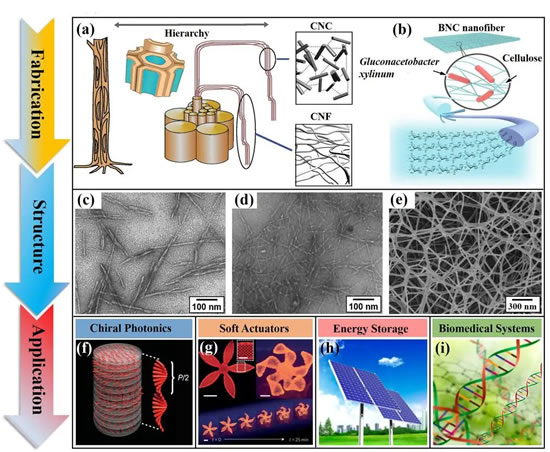
Figure 1. Sources, microstructure and potential applications of nanocellulose
Nanocellulose functional materials for chiral photonics
Chirality is ubiquitous in nature and plays an important role in life science and material science. CNC is a nanometer chiral photonic crystal material. The chiral nematic liquid crystal phase structure of CNC can not only be used to prepare functional film materials with high mechanical properties and special optical properties, but also be used as a kind of raw soft template to induce nanoparticles to form functional materials with chiral structure. Therefore, chiral catalysis, chiral metamaterials, polarization encryption and biosensing have important application value.
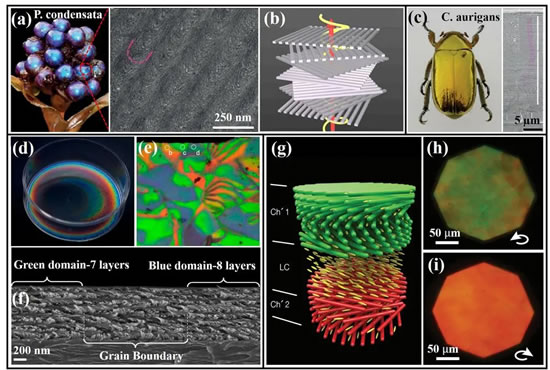
Figure 2. Application of nanocellulose functional materials in chiral photonics
Nanocellulose functional materials for software drivers
n recent years, scientists have ingeniously designed a variety of biomimetic intelligent actuators based on soft material derived from various synthetic polymers, such as typical hydrogels, liquid crystal elastomers and shape memory polymers, to imitate or even surpass the driving behavior of living organisms. However, these traditional polymer-based materials are usually synthesized through complex processes, are costly and difficult to degrade or recycle, which may place a certain burden on the environment. It is worth noting that biomimetic software drivers based on nanocellulose have attracted more and more attention due to their superior mechanical flexibility, high moisture absorption capacity, sustainability or eco-friendliness, reusable or biodegradable and biocompatibility.
Nanocellulose functional materials for energy storage

FIG. 3. Application of nanocellulose based functional materials in software driver field
Nanocellulose has a large specific surface area, excellent mechanical flexibility, good chemical stability and environmental friendliness, and the fibers are interlaced with each other. It is easy to form a porous structure for ion and electron transport. Hydrophilic functional groups such as hydroxyl group and carboxyl group are attached on the surface of the fiber, which has good moisture retention ability in electrolyte solution, making the derived functional materials have a wide application prospect in the field of energy storage. Nanocellulose based functional materials can not only be used as various components of energy storage devices, such as diaphragm, electrolyte, adhesive and carrier. At the same time, high temperature carbonization, in situ chemical polymerization and electrochemical deposition strategies can be used to composite with electroactive materials to obtain finer nanostructures and excellent electrochemical properties.

Figure 4. Application of nanocellulose based functional materials in energy storage field
Nanocellulose functional materials for biomedical applications
n the dry state, the mechanical properties of nanocellulose are comparable to human bone, while in the wet state, the physical and chemical properties of nanocellulose are similar to extracellular matrix. Meanwhile, in addition to excellent physical and chemical properties, nanocellulose has high compatibility with other polymers or functional materials, which makes nanocellulose functional materials have good practical value and wide application prospects in the biomedical field.

Figure 5. Application of nanocellulose based functional materials in biomedical field

Copyright © 2019-2022 Zhejiang Leinuo Textile Technology Co., Ltd. All Rights Reserved. Privacy policy Terms and Conditions
 EN
EN  AR
AR NL
NL FR
FR DE
DE HI
HI IT
IT JA
JA KO
KO NO
NO PL
PL PT
PT RO
RO RU
RU ES
ES SV
SV ID
ID LV
LV LT
LT SR
SR SK
SK SL
SL UK
UK VI
VI TH
TH TR
TR FA
FA AF
AF MS
MS SW
SW GA
GA CY
CY BE
BE IS
IS MK
MK YI
YI HY
HY AZ
AZ EU
EU KA
KA HT
HT UR
UR BN
BN BS
BS CEB
CEB EO
EO GU
GU HA
HA HMN
HMN IG
IG JW
JW KN
KN KM
KM LO
LO LA
LA MI
MI MR
MR MN
MN NE
NE PA
PA SO
SO